Space-saving therapy chairs for Hybrid-DRG outpatient clinics
The introduction of Hybrid-DRG (Diagnosis Related Groups) remuneration agreements presents hospitals and medical care centres with new infrastructural challenges. The clear focus of healthcare policy is on shifting services to the outpatient sector.
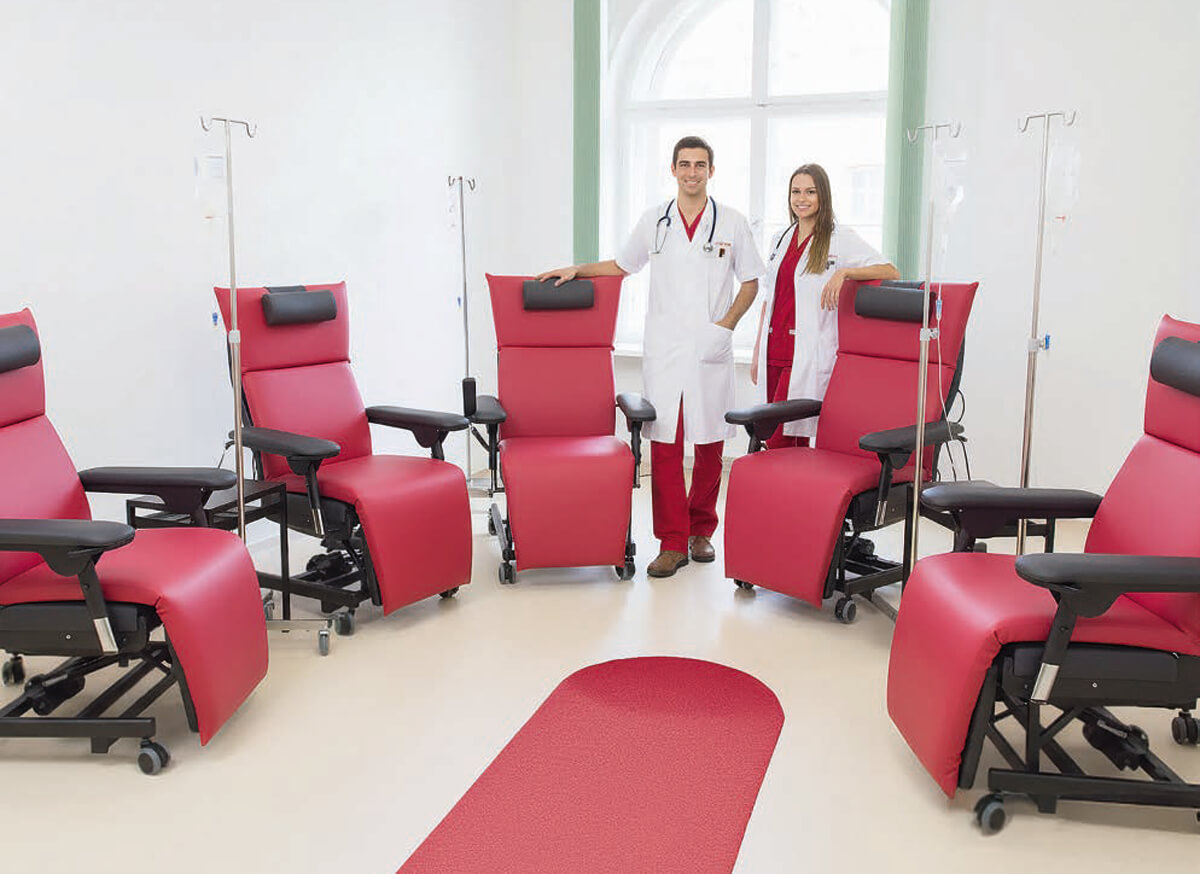
For clinics and practices, this means that outpatient monitoring wards (e.g. after interventional procedures) and interdisciplinary infusion outpatient clinics play a central role. Many facilities are also faced with the challenge of optimising the use of existing space to manage rising patient numbers efficiently—without cost-intensive conversions.
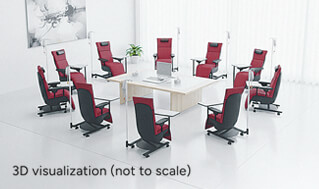 The solution lies in intelligent equipment designed for short stays. This is where space-saving therapy chairs from MEDICAL provide a decisive approach to optimising space usage in the Hybrid-DRG (Diagnosis Related Groups) context—for example in anaesthesia, dermatology, gynaecology, ENT, nephrology, oncology, rheumatology, transfusion medicine, urology, cardiology, orthopaedics, surgery or outpatient surgery centres.
The challenge of Hybrid-DRG (Diagnosis Related Groups): Space optimisation in the modern outpatient clinic
Classic hospital beds are primarily designed for long-term inpatient care. In the dynamic workflows of modern outpatient settings, they often prove inefficient in terms of space utilisation. A standard bed—including the necessary manoeuvring space—ties up valuable square metres, space that can be used more effectively for patients who stay only a few hours.
The economic pressure to avoid inpatient admissions, combined with the medical goal of improving rehabilitation outcomes through early mobilisation, requires a rethink in facility planning.
The solution: Significantly more capacity with therapy chairs
MEDICAL therapy chairs are an ideal answer to the requirements of patient flows shaped by Hybrid-DRG (Diagnosis Related Groups). The electronically operated furniture combines high comfort for stays lasting several hours with minimal space requirements.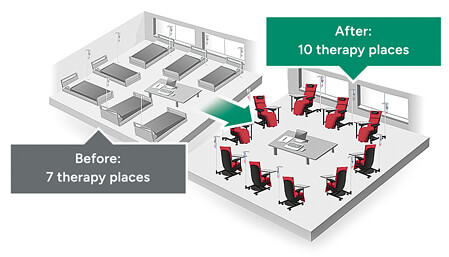 The decisive advantage for room management: therapy chairs from MEDICAL require significantly less floor space than conventional beds.
A practical example illustrates the potential for increasing capacity: In an area previously designed for 7 monitoring beds, the use of compact therapy chairs can create up to 10 fully equipped treatment places.
The space savers for hybrid DRGs:
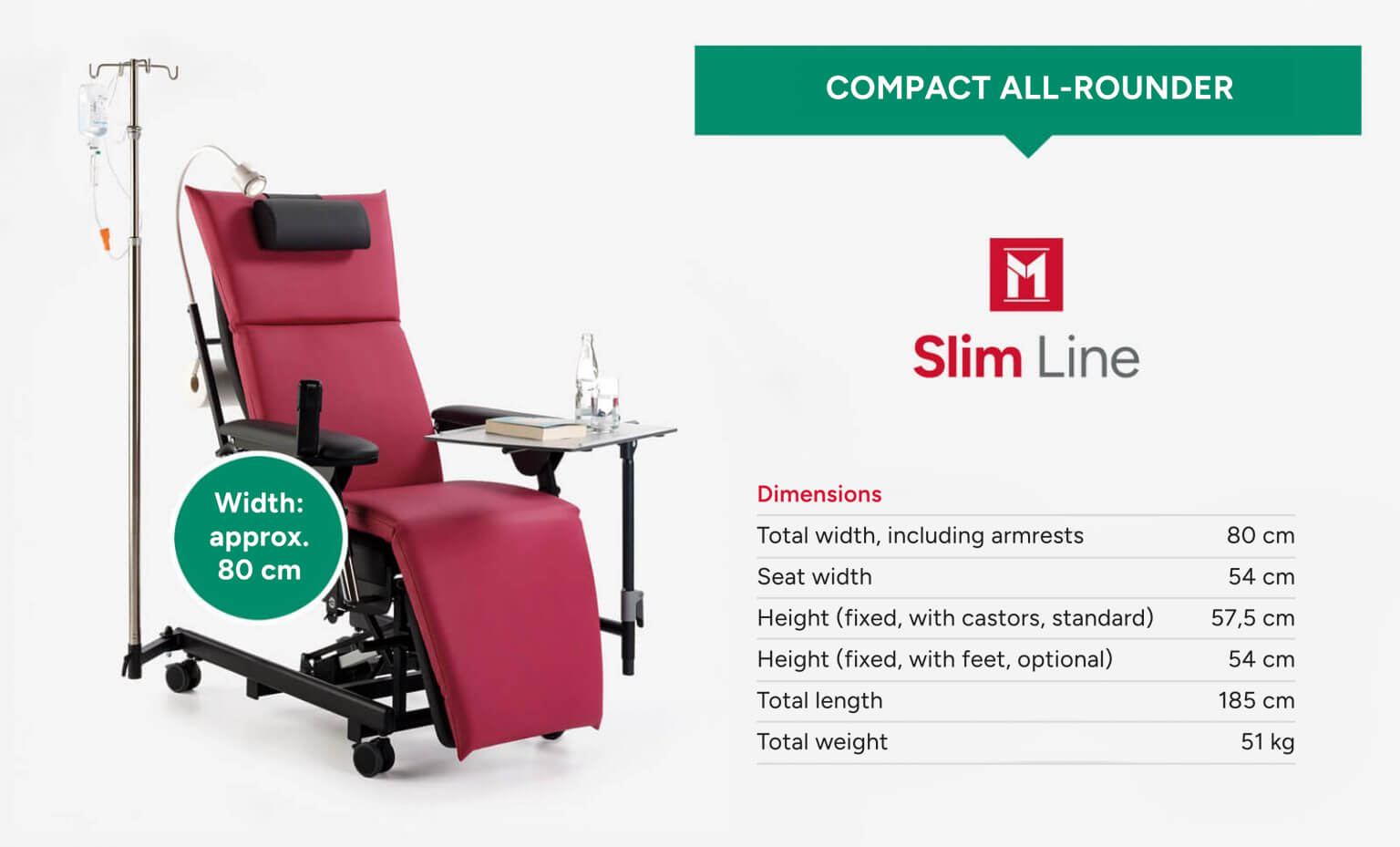
- The compact all-rounder: With an overall width of only approx. 80 cm, the Slim Line is ideal for areas with limited space. Two electric drives and 90° access also ensure easy handling and patient comfort.
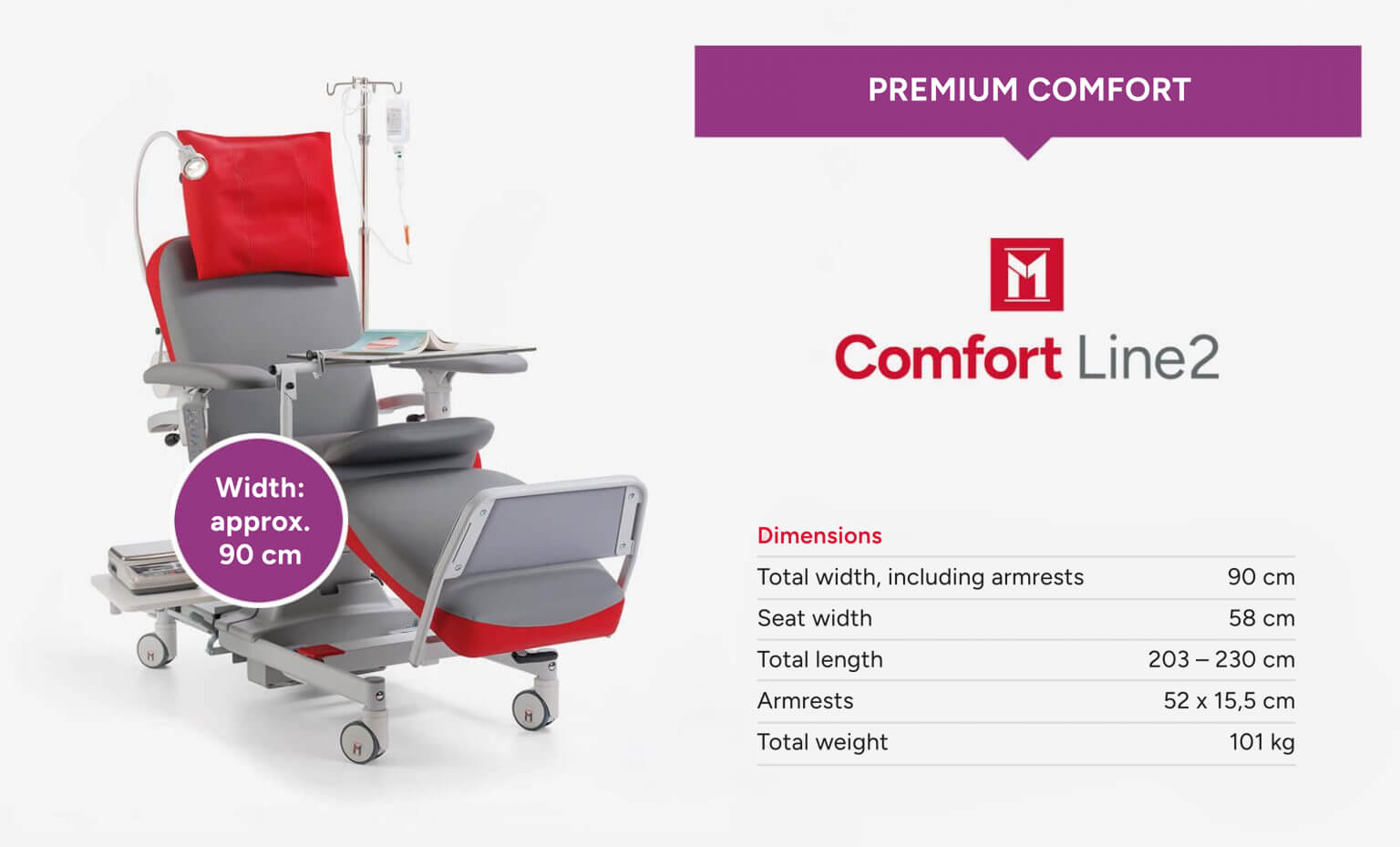
- The premium comfort tip: With a width of approx. 90 cm, the Comfort Line2 offers five electric drives for precise positioning and an integrated shock position function for emergency situations.
Added value beyond saving space
Switching to therapy chairs in outpatient monitoring offers significant benefits for workflows and patient satisfaction—beyond the pure gain in space:
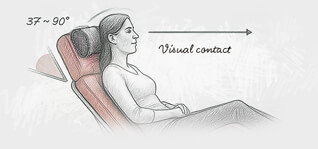 Safety through overview and mobility: In busy recovery areas, maintaining an overview is crucial. Chair-based layouts give nursing staff better visual contact with all patients. High-quality castors also make chairs far more agile than beds when quick repositioning is needed in critical situations.
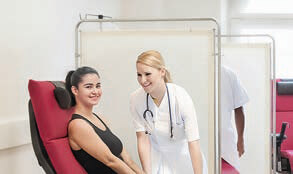 Promoting patient activation: Treatment in a sitting rather than a lying position supports a positive basic posture and signals to the patient that the rehabilitation phase has already begun. This more active stance encourages communication and supports the goal of outpatient care: a fast return to the home environment.
- Hygiene and atmosphere: Despite more compact positioning, the required distances for infection control and privacy can still be maintained. Due to their design, chairs are often quicker and easier to clean than complex beds—and they help create a pleasant atmosphere.
- Efficient workflows through integration: Well-designed accessories turn the therapy chair into an autonomous treatment unit. Integrated tables, infusion holders and shelves reduce the need for separate side furniture and keep all essential items available directly at the “point of care”.
Conclusion: Investing in efficient outpatient structures
Successful adaptation to hybrid DRG requires forward-looking investment in infrastructure. MEDICAL therapy chairs—manufactured in Germany—are a logical component for future-proof infusion outpatient clinics and post-operative monitoring units. They also enable clinics and practices to increase throughput without expanding existing space—while improving staff overview and patient comfort.
Companies worldwide trust us: